Struggling with trauma, anxiety, emotional overwhelm or feeling zoned out? Discover Internal Family Systems (IFS) therapy in India for deep healing. Internal Family Systems (IFS) Therapy for Trauma, Anxiety & Emotional Overwhelm If you are a high-functioning professional who appears strong on the outside but feels anxious, emotionally overwhelmed, heavy in the body, or suddenly …

Struggling with trauma, anxiety, emotional overwhelm or feeling zoned out? Discover Internal Family Systems (IFS) therapy in India for deep healing.
Internal Family Systems (IFS) Therapy for Trauma, Anxiety & Emotional Overwhelm
If you are a high-functioning professional who appears strong on the outside but feels anxious, emotionally overwhelmed, heavy in the body, or suddenly zoned out under stress — IFS therapy may help you understand why.
Many individuals dealing with trauma, attachment wounds, chronic anxiety, or burnout experience internal conflict:
-
One part wants to stay calm.
-
Another reacts with anger.
-
Another shuts down completely.
-
Another pushes you to overwork and “try harder.”
Internal Family Systems therapy, developed by Dr. Richard Schwartz, offers a trauma-informed framework that explains this internal conflict without shame.
The core idea is simple but powerful:
You are not broken. You are made up of parts — and there are no bad parts.
What Is Internal Family Systems (IFS) Therapy?
IFS is an evidence-based psychotherapy approach that views the mind as naturally multiple.
Rather than seeing anxiety, emotional reactivity, perfectionism, dissociation, or inner criticism as flaws, IFS understands them as protective parts of your internal system.
IFS is especially effective for:
-
Trauma and complex trauma
-
Chronic anxiety
-
Emotional dysregulation
-
Attachment wounds
-
Burnout in high-achieving professionals
-
Substance-related coping patterns
-
Relationship conflict
Instead of suppressing symptoms, IFS helps you understand the protective roles behind them.
Understanding Parts: Why You Feel Overwhelmed, Anxious, or Zoned Out
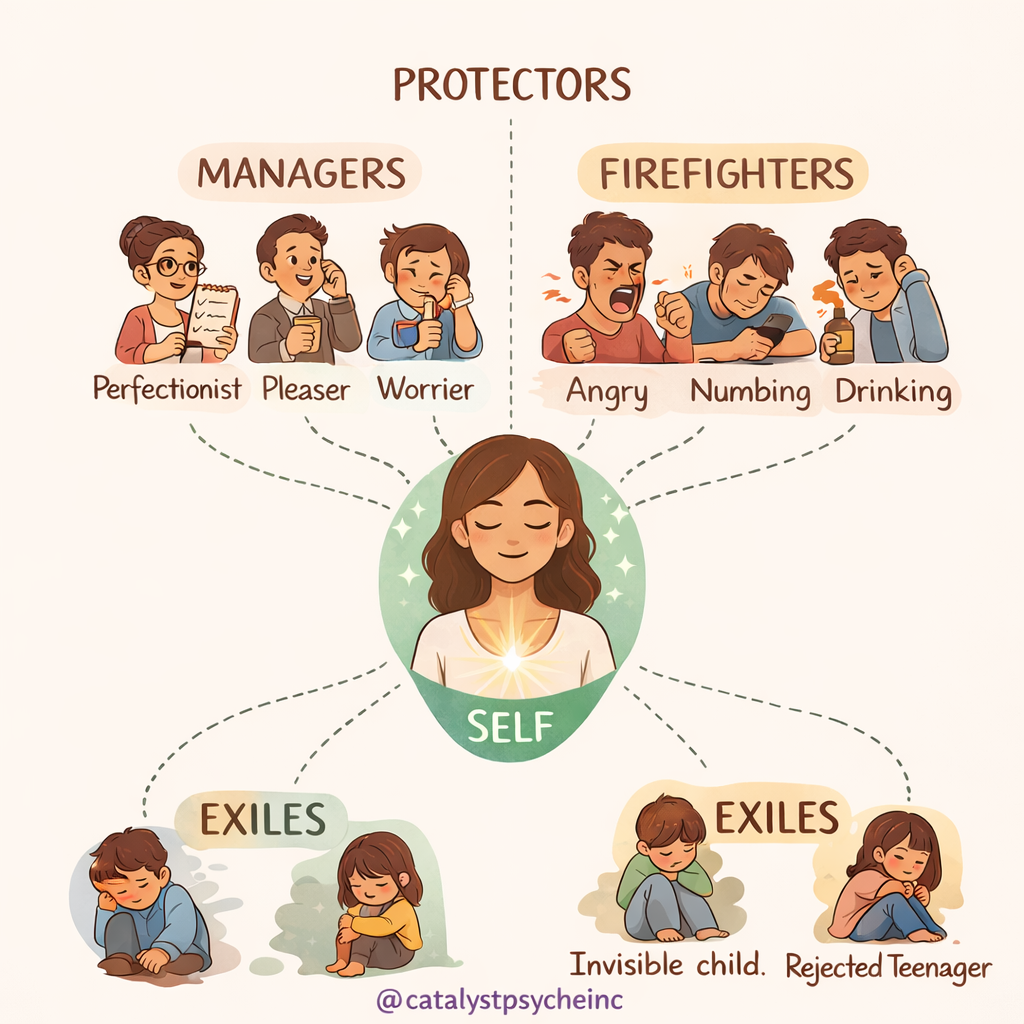
In IFS therapy, we identify two major types of parts:
1. Exiles – The Wounded Parts Carrying Trauma
Exiles are vulnerable parts that hold painful emotions such as:
-
Shame
-
Fear
-
Worthlessness
-
Rejection
-
Loneliness
These parts often originate from childhood experiences, relational trauma, bullying, emotional neglect, or attachment injuries.
When exiles are triggered, you may experience:
-
Sudden anxiety
-
Emotional flooding
-
Heaviness in the chest
-
Tightness in the throat
-
A sinking feeling in the stomach
-
Overwhelming sadness
Because these emotions feel intense, other parts step in to protect you.
Protectors – The Parts Trying to Keep You Safe
Protectors develop to prevent you from feeling the pain of exiles.
There are two types:
Managers (Proactive Protectors)
Managers try to prevent pain before it happens. They may appear as:
-
Perfectionism
-
Overthinking
-
People-pleasing
-
Hyper-independence
-
Constant planning
-
Anxiety about performance
Managers are common in high-functioning professionals dealing with burnout and chronic stress.
Firefighters (Reactive Protectors)
Firefighters act when emotional pain becomes overwhelming.
They may show up as:
-
Anger outbursts
-
Emotional shutdown
-
Dissociation (feeling zoned out)
-
Binge eating
-
Substance use
-
Excessive scrolling
-
Avoidance
- Self Harm
When you suddenly feel numb, detached, or disconnected from your body, a firefighter may be protecting you from emotional overload.
These behaviors are not signs of weakness.
They are protective survival strategies shaped by trauma and anxiety.
What Is “Blending” in IFS? Why You Feel Taken Over
Blending occurs when a part completely takes over your awareness.
Instead of noticing “a part of me feels anxious,” you experience:
“I am anxious.”
Instead of recognizing “a part feels worthless,” you believe:
“I am worthless.”
When blended:
-
Emotional regulation becomes difficult
-
Anxiety feels consuming
-
Body heaviness intensifies
-
Thoughts feel extreme
-
You may feel reactive or impulsive
Blending is common in trauma survivors because the nervous system remains sensitized.
IFS therapy helps you gently “unblend” so you can regain clarity and choice.
The Self: The Calm, Undamaged Core Within You
One of the most powerful aspects of Internal Family Systems is the concept of the Self.
The Self is not another part. It is your core essence.
Even if trauma has fragmented your internal system, the Self remains intact and undamaged.
When you are in Self-energy, you experience:
-
Calm
-
Curiosity
-
Compassion
-
Clarity
-
Confidence
-
Courage
-
Creativity
-
Connectedness
The Self regulates the nervous system naturally.
When Self leads:
-
Anxiety softens
-
Emotional overwhelm reduces
-
Protectors relax
-
Exiles feel witnessed
-
Internal conflict decreases
Healing does not happen by suppressing parts.
It happens when the Self leads the internal system.
How IFS Can Help You Get Over Trauma and Anxiety
Internal Family Systems therapy works by: Helping you find your parts, making it safe to get to Self-energy, getting protectors to trust you, safely reaching out to areas of trauma that are still in exile, helping people let go of their feelings which have been stuck with them since child state.
When trauma parts let go of their burdens:
- Chronic anxiety goes down
- The heaviness in the body goes away.
- Less emotional reaction
- Dissociation happens less often
- Better relationships
IFS works especially well for those who look like they know what they’re doing on the outside but feel like they’re losing control on the inside.
Internal Family Systems Therapy in India
IFS therapy is increasingly recognized worldwide as a powerful trauma-informed approach.
At Catalyst Psyche Inc., we work with high-functioning professionals who struggle with:
-
Anxiety despite success
-
Emotional shutdown in relationships
-
Burnout and internal pressure
-
Trauma from past relational wounds
-
Feeling disconnected from themselves
- Self harm as measure to ease off the emotional pain
IFS therapy offers structured, deep healing — not just coping strategies.
Frequently Asked Questions
Is Internal Family Systems evidence-based?
Yes. IFS is an evidence-supported psychotherapy approach with growing research validating its effectiveness for trauma, depression, anxiety, and emotional regulation.
Is IFS the same as multiple personality disorder?
No. IFS recognizes that having “parts” is normal and healthy. It is not Dissociative Identity Disorder. Everyone has parts.
How does IFS help with anxiety?
IFS helps by identifying the protective parts driving anxiety, building internal safety, and helping trauma-holding parts release burdens — reducing chronic nervous system activation.
Why do I feel zoned out during stress?
Feeling zoned out is often a protective “firefighter” response linked to dissociation. It helps the nervous system cope with overwhelming emotional states.
How long does IFS therapy take?
Healing timelines vary depending on trauma history, nervous system regulation, and readiness. Many clients begin noticing internal shifts within weeks of consistent therapy.
If you are a high-achieving professional who feels anxious, emotionally overwhelmed, heavy in the body, or disconnected despite outward success, you do not need to keep managing this alone.
IFS therapy offers a structured, trauma-informed path toward internal clarity and emotional stability.
Book a consultation to explore whether Internal Family Systems therapy is right for you.

References
Schwartz, R. C., & Sweezy, M. (2020). Internal Family Systems Therapy (2nd ed.). Guilford Press.
Internal Family Systems Institute https://ifs-institute.com