Learn how to build healthy relationships using psychology-backed strategies. Improve communication, trust, and emotional connection with science-based insights. Why Healthy Relationships Matter More Than You Think Most people believe relationships depend on “finding the right person.” But psychology suggests something different. Healthy relationships are built — not found. They are shaped through patterns, behaviours, and …

Learn how to build healthy relationships using psychology-backed strategies. Improve communication, trust, and emotional connection with science-based insights.
Table of Contents
ToggleWhy Healthy Relationships Matter More Than You Think
Most people believe relationships depend on “finding the right person.”
But psychology suggests something different.
Healthy relationships are built — not found.
They are shaped through patterns, behaviours, and emotional awareness.
In therapy, one of the most common questions people ask is:
“Why do I keep attracting the same kind of relationships?”
This isn’t coincidence — it’s conditioning.
For example, someone who grew up feeling emotionally unheard may unknowingly choose partners who are emotionally unavailable.
If relationship stress is affecting your emotional well-being, professional support can help you break these patterns.
What Makes a Relationship Healthy?
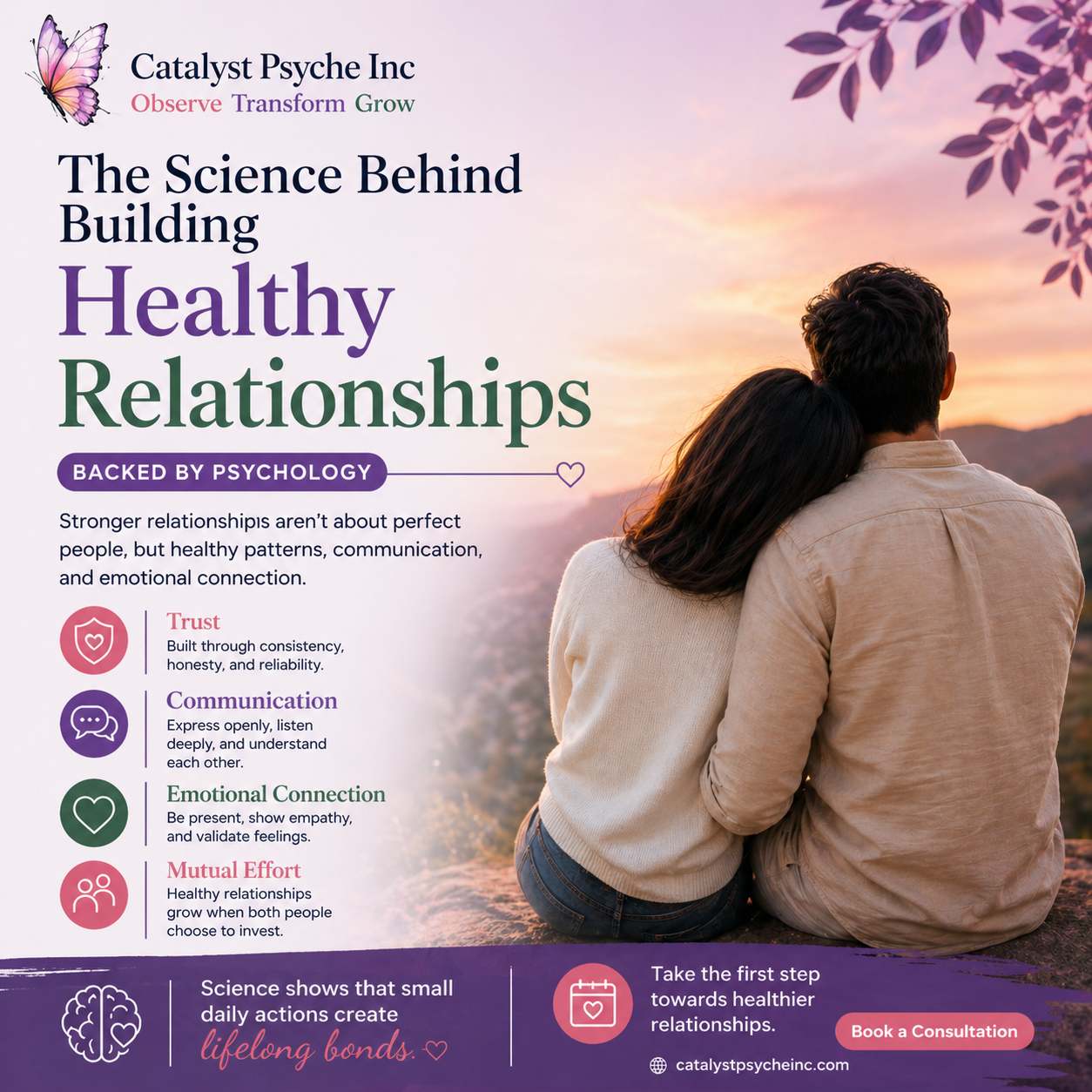
A healthy relationship is not defined by the absence of conflict — but by how two people handle it.
It includes:
- Emotional safety
- Honest and respectful communication
- Trust and reliability
- Mutual effort
- The ability to repair after conflict
In real life, a healthy relationship looks like this:
Two people argue, take space, reflect — and then come back to say, “That didn’t go well. Can we try again?”
The Psychology Behind Relationship Patterns
One of the most important frameworks in relationship science is Attachment Theory, developed by John Bowlby.
It explains how early emotional experiences shape how we relate to others in adulthood.
Research shows that our attachment style influences how we communicate, handle conflict, and build trust.
Read research on attachment and communication
Anxious Attachment
People with anxious attachment often seek reassurance and may overthink interactions.
Example: Feeling worried or asking “Did I do something wrong?” when a partner replies late.
Avoidant Attachment
This pattern involves emotional withdrawal, especially during difficult conversations.
Example: Shutting down or distancing during conflict.
Secure Attachment
Secure individuals communicate openly and handle conflict with stability.
Example: Expressing feelings clearly and staying present during emotional moments.
Communication in Relationships: What Actually Works
Most relationship problems are not about lack of love — they are about difficulty communicating under stress.
Small shifts in communication can make a significant difference.
Instead of blaming, expressing feelings creates connection.
Instead of: “You never listen to me”
Try: “I feel unheard when I’m talking.”
This shift reduces defensiveness and increases understanding.
Trust Is Built Through Consistency
Trust is not built through promises — it is built through repeated, reliable behaviour.
Research on emotional connection and trust
Trust grows when someone consistently shows up — emotionally and behaviourally.
It is strengthened by:
- Consistency
- Emotional presence
- Honesty
Conflict Is Normal. Disconnection Is Not.
Conflict is a natural part of any relationship.
The problem is not conflict — it is avoidance.
Research on attachment and conflict
Unhealthy pattern:
Argument → Silence → Resentment
Healthy pattern:
Argument → Pause → Reflection → Repair
Example: “I needed some time to process, but I want to understand your perspective now.”
Boundaries: A Key Relationship Skill
Boundaries are not about pushing people away — they are about creating clarity.
They help prevent resentment and emotional burnout.
Healthy boundaries can sound like:
- “I need some time to process this.”
- “Let’s talk about this later.”
Small Daily Habits That Strengthen Relationships
Strong relationships are not built in big moments — they are built in small, consistent ones.
This can look like:
- Expressing appreciation
- Asking meaningful questions
- Spending undistracted time together
Final Thoughts
Healthy relationships are built — not found.
They require awareness, communication, and emotional responsibility.
And most importantly, they require a willingness to understand yourself — not just your partner.
Work With a Therapist
This article is reviewed by Sonal Kishnani, Counselling Psychologist, trained in evidence-based approaches including attachment-focused therapy and emotional regulation techniques.
She works with individuals and couples dealing with:
- Relationship difficulties
- Communication issues
- Trust concerns
- Emotional regulation
If you feel stuck in repeating patterns or emotional disconnection, therapy can help you build healthier relationships.
[bookly-form]
References
- Exploring the association between attachment style and psychological well-being
- Trust in relationships: The role of attachment and relationship experiences
- Trust, communication, and healthy attachment
- Attachment styles, communication, and commitment in young adults
- Conflict Communication Styles and Trust in Adult Attachment Styles