War Anxiety: 7 Psychological Reasons Why War News Triggers Anxiety and Lockdown Trauma Again Why does news about war feel so emotionally overwhelming? Learn how war anxiety, doomscrolling, lockdown trauma, and collective stress affect mental health in today’s digital world. There was a time when words like lockdown, quarantine, emergency, isolation, and uncertainty became part …

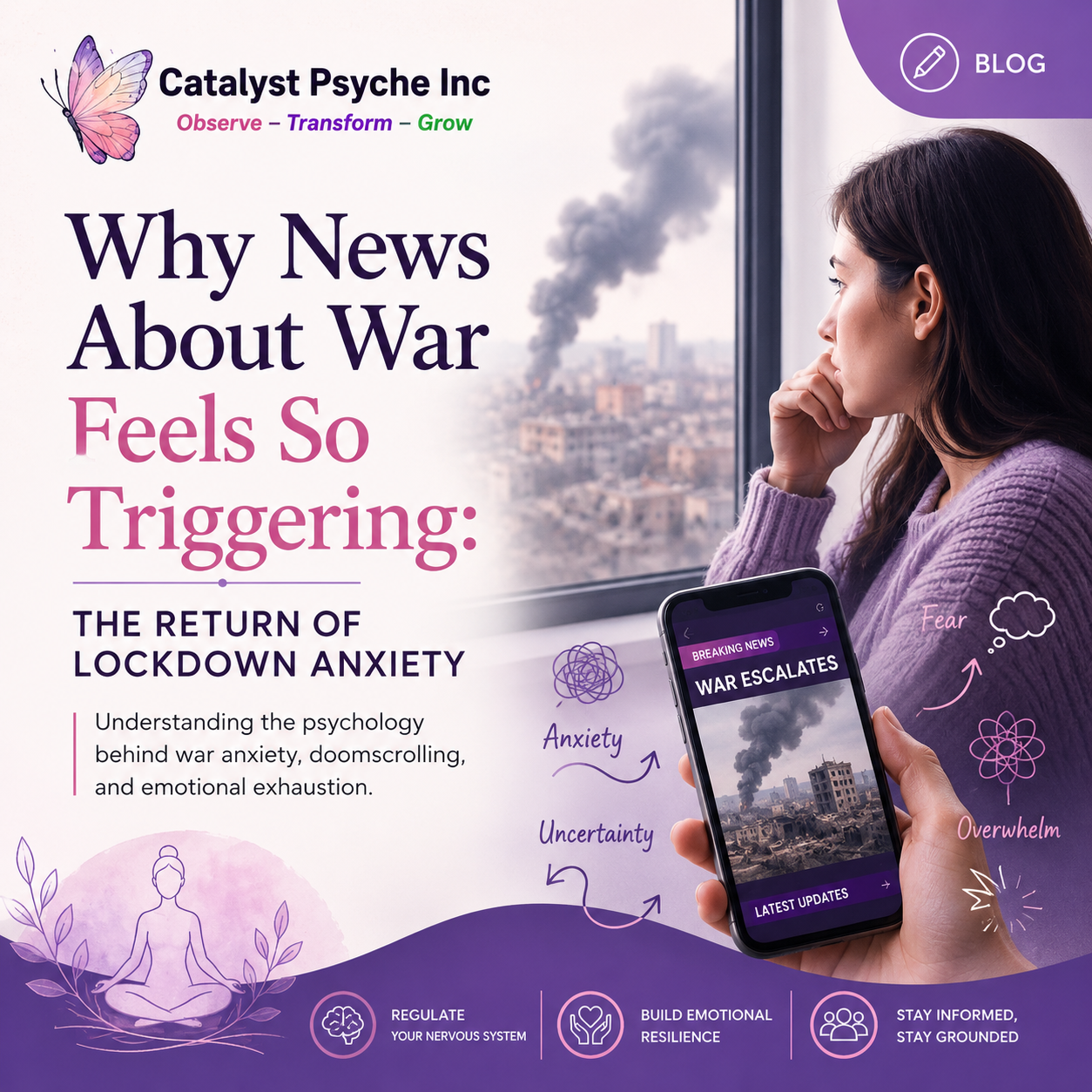
War Anxiety: 7 Psychological Reasons Why War News Triggers Anxiety and Lockdown Trauma Again
Why does news about war feel so emotionally overwhelming? Learn how war anxiety, doomscrolling, lockdown trauma, and collective stress affect mental health in today’s digital world.
There was a time when words like lockdown, quarantine, emergency, isolation, and uncertainty became part of everyday life.
News notifications dictated emotional states. Every cough sounded threatening. Every update felt urgent. The world collectively entered survival mode. For many people, the COVID-19 pandemic was not just a public health crisis. It became a psychological crisis.
Even years later, many nervous systems still carry the emotional memory of that period.
This is why recent discussions around:
– war
– geopolitical conflict
– emergency preparedness
– economic instability
– and global uncertainty
are affecting people so intensely.
Even when a war is geographically distant, many individuals report feeling:
– emotionally overwhelmed
– mentally exhausted
– restless
– anxious
– unable to stop checking the news
For some, it feels as though the fear of another lockdown is quietly returning.
This reaction is not irrational.
It is deeply psychological.
1. War Anxiety Feels Personally Threatening
The human brain is biologically wired to detect danger. From an evolutionary perspective, survival depended on noticing threats quickly and preparing the body to respond. When the brain perceives uncertainty or danger, the nervous system activates a stress response. Heart rate increases. Attention narrows. Thoughts become hyper-focused on potential risks.
After prolonged exposure to a global crisis like COVID-19, many individuals became psychologically conditioned to anticipate worst-case scenarios. As a result, even indirect reminders of instability – such as war-related headlines – can trigger heightened anxiety.
Psychologists often refer to this phenomenon as a trauma reminder. Trauma reminders are present-day events that unconsciously reactivate emotional memories connected to previous distressing experiences.
Research has consistently shown that excessive exposure to crisis-related media is associated with increased anxiety, stress, emotional exhaustion, and symptoms of post-traumatic stress. Studies following the Boston Marathon bombings and the Iraq War found that repeated media exposure to traumatic events could negatively affect mental health even among individuals who were not directly involved in the events themselves.
In other words, the brain often responds not only to actual danger, but also to perceived danger
2. Lockdown Trauma Can Resurface During Global Crisis News
The pandemic changed the way many people emotionally process uncertainty. During lockdowns, individuals experienced:
– social isolation
– fear of illness
– loss of routine
– financial instability
– excessive media exposure
– uncertainty about the future
The nervous system adapted by becoming hyper-alert. Now, when people hear conversations about war, economic instability, emergency preparedness, or possible disruptions to daily life, the brain may subconsciously associate those situations with the emotional memories of lockdown. The brain may subconsciously associate those situations with the emotional memory of lockdown.
This explains why some individuals suddenly experience:
– chest heaviness
– panic about the future
– sleep difficulties
– irritability
– mental exhaustion
– difficulty concentrating
The reaction is often not only about the present moment. It is also about what the body remembers.
Mental health professionals increasingly recognize that collective experiences like pandemics can create collective trauma. Unlike individual trauma, collective trauma affects entire communities and societies simultaneously, leaving behind shared psychological wounds that can resurface during future crises.
3. Doomscrolling: The Brain’s Search for Safety But Actually Leads To Anxiety and Emotional Exhaustion
One of the most common responses during uncertain times is doomscrolling — compulsively consuming distressing news online for long periods. Ironically, doomscrolling is usually driven by the brain’s attempt to feel safer and more prepared. People often believe:
“If I keep checking updates, I’ll feel more in control.”
But research shows the opposite often happens. Studies have linked doomscrolling with:
– increased anxiety
– depressive symptoms
– emotional exhaustion
– stress dysregulation
– existential anxiety
A 2024 cross-cultural study published in Computers in Human Behavior Reports found that excessive exposure to distressing online content was associated with heightened existential anxiety and pessimistic thinking.
Researchers have also warned that repeated exposure to traumatic news through social media may contribute to vicarious trauma. Vicarious trauma refers to emotional distress experienced indirectly through repeated exposure to others’ suffering.
The nervous system interprets repeated threat exposure as ongoing danger. As a result, compulsive news consumption can trap individuals in a cycle where:
1. Anxiety increases news checking
2. News checking increases emotional distress
3. Emotional distress creates further compulsive scrolling
Over time, this cycle can contribute to burnout, emotional numbness, hopelessness, and chronic stress.
4. Social Media Algorithms Amplify Fear and Negative News
Modern social media platforms are designed to maximize engagement. And emotionally intense content tends to generate more attention than calm or neutral content. This means: alarming headlines, graphic videos, fear-based speculation, emotionally charged discussions are often amplified algorithmically.
Psychologists describe this as negativity bias — the brain’s tendency to pay greater attention to threatening information than positive information. In the digital age, people no longer encounter stress occasionally.
They carry the world’s crises in their pockets 24/7.
The result is a state of continuous psychological alertness where the brain rarely experiences emotional recovery.
5. Constant News Exposure Can Overload the Nervous System
Many people dismiss their reactions by saying:
“I’m overthinking.”
“I’m just being dramatic.”
But many of these reactions are actually signs of nervous system overload. Common signs include:
- Constantly checking news updates
- Feeling emotionally exhausted after social media use
- Difficulty disconnecting from distressing content
- Sleep disturbances
- Feeling mentally “on edge”
- Catastrophic thinking
- Difficulty concentrating
- Physical fatigue despite adequate rest
These are not signs of weakness.
They are signs that the brain is struggling to process prolonged uncertainty and stress.
6. How to Stay Informed Without Anxiety and Doomscrolling
Completely avoiding world events is neither realistic nor necessary. Staying informed matters. But remaining psychologically immersed in fear throughout the day can negatively affect mental wellbeing. Mental health professionals often recommend:
- Limiting news exposure to specific times of the day
- Choosing credible sources over sensationalized content
- Avoiding excessive scrolling before sleep
- Taking intentional social media breaks
- Practicing grounding techniques
- Maintaining routines and physical movement
- Prioritizing sleep and nutrition
- Spending time in offline human connection
Research suggests that reducing excessive media exposure during crises can significantly reduce emotional distress and anxiety symptoms.
The goal is not ignorance.
The goal is emotional regulation.
7. Mental Health During Global Crisis Requires Awareness, Not Panic
We often assume anxiety only comes from what is happening around us. But sometimes anxiety also comes from what the body remembers. For many individuals, war-related headlines do not simply trigger fear about the future. They reactivate emotional memories of:
– uncertainty
– helplessness
– isolation
– survival mode
– emotional exhaustion from the pandemic years
In a world where distressing information is available every second, protecting mental health requires more than staying updated. It requires learning how to remain informed without emotionally drowning in fear. Mental wellbeing during uncertain times is not avoidance.
It is awareness.
It is balance.
And sometimes, it is choosing peace over panic.
Read More Internal Family Systems (IFS) Therapy for Trauma & Anxiety in India | Catalyst Psyche Inc
Mental Health: A Universal Right
If This Resonated With You, It May Be Time to Pause and Check In With Yourself.
Living in a constant state of emotional alertness can quietly exhaust both the mind and body. And sometimes, we normalize stress for so long that we forget what emotional safety feels like. If recent events, uncertainty, or overwhelming thoughts have been affecting your mental wellbeing, support can help.
At Catalyst Psyche Inc., we aim to create a safe, compassionate, and non-judgmental space where individuals can better understand their emotions, process anxiety, and rebuild emotional balance.
Seeking help is not a sign of weakness.
It is a step toward emotional awareness and healing.