Keep having the same arguments with your partner? Learn why relationship conflicts repeat, how to resolve solvable problems, manage lasting differences, and build a healthier relationship. Relationship Conflicts: Why Do We Keep Having the Same Arguments? Have you ever found yourself having the same argument with your partner for the tenth time, wondering why nothing …

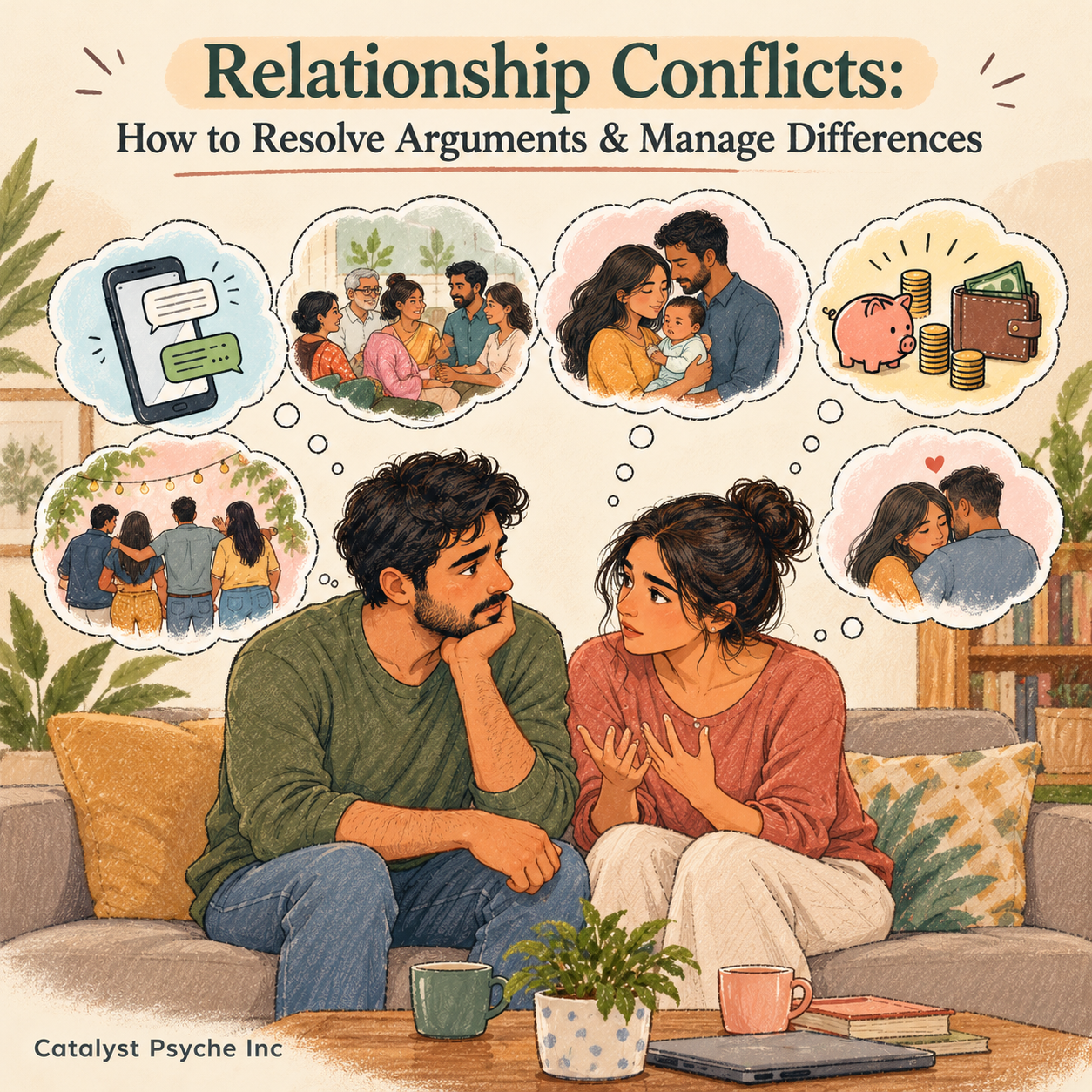
Keep having the same arguments with your partner? Learn why relationship conflicts repeat, how to resolve solvable problems, manage lasting differences, and build a healthier relationship.
Relationship Conflicts: Why Do We Keep Having the Same Arguments?
Have you ever found yourself having the same argument with your partner for the tenth time, wondering why nothing seems to change?
Perhaps one of you wants to spend weekends with family, while the other prefers spending time alone together. Maybe one partner feels uncomfortable when the other stays out late with friends. Or perhaps a seemingly minor disagreement about household chores turns into a much bigger argument about respect, responsibility, and feeling valued.
You may have already discussed the issue several times. You may have promised to change, tried to compromise, or decided to stop bringing it up altogether. Yet, a few days or weeks later, you find yourselves right back where you started.
It can be exhausting to love someone and still struggle to understand them or to be understood by them. Over time, repeated disagreements can leave both partners feeling unheard, misunderstood, or emotionally distant.
But here’s something important to understand: not every relationship conflict needs to be completely resolved for a relationship to be healthy.
Relationship researcher Dr. John Gottman distinguishes between two broad types of relationship problems: solvable problems and perpetual problems. Some disagreements can be addressed through practical solutions, while others arise from enduring differences in personality, values, preferences, or life goals. His research suggests that approximately 69% of conflicts in the couples he studied were perpetual rather than fully resolvable (Gottman Institute).
This does not mean that 69% of relationships are unhappy or destined to fail. It means that recurring differences are a normal part of intimate relationships.
Understanding what kind of conflict you are experiencing can help you stop fighting the same battle in the same way and start responding more constructively.
Understanding the Two Types of Relationship Conflicts
Before trying to fix a disagreement, it helps to understand what you are actually dealing with.
Table of Contents
ToggleSolvable problems: When a practical solution is possible
Solvable problems are disagreements about a specific situation that can usually be addressed through planning, communication, negotiation, or compromise.
For example:
- Deciding who will cook dinner or do the dishes.
- Planning a holiday within a shared budget.
- Agreeing on how frequently to meet each other’s friends or in-laws
- Dividing household responsibilities.
Imagine a couple living together in Delhi NCR. Both partners work full-time, but one feels they are doing most in managing or keeping the house together. The other believes that earning a larger share of the household income is their contribution.
The argument might begin with a anything small but quickly become a disagreement about fairness.
In this situation, a practical solution may involve creating a shared list of responsibilities, accounting for both partners’ work schedules, and agreeing on a division of tasks that feels reasonable to both.
The problem is not necessarily a fundamental incompatibility. It may be that the couple has not yet established a workable arrangement.
What helps with solvable problems?
- Clearly define the problem rather than attacking each other’s character.
- Identify what each person needs.
- Agree on a practical solution.
- Decide who will do what and when.
- Review the arrangement after trying it.
Instead of saying, “You never help me around the house,” try saying:
“I’m feeling overwhelmed by the amount of housework I’m handling. Can we work out a division of responsibilities that feels fair to both of us?”
The aim is to solve the problem together rather than establish who is right.
Perpetual problems: When the same difference keeps returning
Perpetual problems are recurring disagreements rooted in relatively enduring differences between partners. These may involve personality, emotional needs, lifestyle preferences, values, family relationships, or visions of the future. Consider a few examples from Indian relationships.
Example 1: Family involvement
One partner believes that visiting parents every Sunday is an important expression of love and responsibility. The other values family but needs weekends to rest, socialise, or spend time as a couple.
They may repeatedly argue about weekend plans. Even if they agree to visit family twice a month, the underlying difference remains.
For one partner, family involvement may represent belonging, gratitude, and duty. For the other, having personal time may represent autonomy, rest, and emotional connection within the relationship.
Neither preference is automatically wrong.
Example 2: Socialising versus staying in
One partner enjoys parties, group trips, and social gatherings. The other prefers quiet evenings and a smaller social circle. The outgoing partner may interpret reluctance to attend events as rejection. The more introverted partner may experience repeated invitations as pressure.
The recurring conflict is not simply about attending a party. It may be about feeling accepted, having freedom of choice, and understanding what togetherness looks like.
Example 3: Saving versus spending
One partner wants to save aggressively for a house, financial security, or family responsibilities. The other believes that travel, experiences, and enjoying the present are also important. Even when both earn well, disagreements about spending may continue because money represents more than numbers.
For one person, saving may mean safety and freedom from uncertainty. For the other, spending on meaningful experiences may represent living fully rather than postponing happiness.
In each example, a compromise may be possible for a particular situation. However, the underlying difference may return in another form. The goal, therefore, is not necessarily to eliminate the difference. It is to learn how to live with it without repeatedly hurting each other.
Example 4: One partner wants a child, while the other isn’t ready
Consider a couple in their early thirties living in Delhi NCR. They have been together for several years, and one partner feels ready to have a child. They imagine building a family and worry that waiting too long may mean missing an important part of life.
The other partner cares deeply about the relationship but doesn’t feel ready for parenthood. They may be concerned about career progression, losing personal freedom, or whether they will be a good parent. They might say, “Let’s wait another year,” without being able to explain when they will actually feel ready.
Over time, the conversations become increasingly painful. The partner who wants a child begins to feel that their dreams are being postponed indefinitely. The partner who isn’t ready feels pressured into making a life-changing decision before they are emotionally prepared. There is another question of biological clock which adds to this pressure.
Family expectations can make the situation even more complicated. Questions from parents and relatives about “good news” or “when are you planning a family?” may intensify the pressure, leaving the couple with less space to explore what they genuinely want.
On the surface, the disagreement appears to be about when to have a child. Beneath it, the partners may be grappling with very different concerns: the desire for parenthood, fear of regret, financial security, personal autonomy, or uncertainty about being to able to create a safe and happy environment for the child or resolving personal issues within.
This is a particularly important example of a recurring conflict because wanting a child and not wanting one—or not being ready to have one—cannot always be reconciled through a conventional compromise. Having a child requires a shared, voluntary decision. Neither partner should be pressured into parenthood, and neither should have to indefinitely suppress a deeply held desire without an honest discussion about the implications.
The couple may need to explore what readiness means to each person, whether there are specific concerns that could be addressed, and whether the partner who isn’t ready can identify a realistic timeline for reconsidering the decision. They may also need to acknowledge the possibility that their long-term goals differ.
The goal isn’t to convince one partner that the other is right. It is to create enough emotional safety and honesty for both people to understand what they want, what they fear, and what the difference may mean for their future together.
A perpetual problem does not mean that a relationship is doomed or that partners should accept every behaviour. It means that some differences require ongoing dialogue, flexibility, and mutual respect rather than a one-time solution.
When a Recurring Disagreement Becomes Relationship Gridlock
Having a recurring disagreement is not necessarily harmful. The difficulty arises when partners become stuck in a cycle in which every discussion leaves them feeling more frustrated and less understood. Gottman describes this as gridlock: a recurring conflict that becomes entrenched, with each partner increasingly rigid in their position.
Consider a couple in Bengaluru who repeatedly argue about visiting their respective hometowns during festivals. She feels that his family always takes priority. He feels that his efforts to maintain relationships with both families are never appreciated.
Every time a festival approaches, the same argument begins. She says, “Your family always comes first.” He responds, “You have a problem with everything my family does.” She becomes more upset because she feels dismissed. He becomes defensive because he feels unfairly criticised. Eventually, one of them stops talking, and the other is left feeling abandoned.
The festival plans remain unresolved, but something more significant has happened: both partners have begun to experience the other as an adversary rather than a teammate.
Over time, the disagreement turned into gridlock can become associated with resentment, emotional exhaustion, and distrust.
Signs that you may be experiencing relationship gridlock
You might recognise some of these patterns:
- You have the same argument repeatedly, without making meaningful progress.
- You feel rejected or misunderstood whenever the topic comes up.
- Each of you becomes increasingly convinced that the other is the problem.
- Discussions become more about defending your position than understanding the other person.
- You begin anticipating arguments before they even happen.
- Conversations about the issue contain little warmth, humour, or affection.
- You avoid the topic entirely because discussing it feels too painful.
- You gradually withdraw emotionally from one another.
The last point is particularly important.
Avoiding an argument may bring temporary relief, but if the underlying concern remains unaddressed, emotional distance can grow. Partners may continue living together, dating, or sharing responsibilities while becoming increasingly disconnected.
The answer is not to force every disagreement to a conclusion. It is to change the way you engage with it.
What Is Really Behind Your Relationship Arguments?
One of the most useful questions you can ask during a recurring conflict is:
“What does this issue mean to each of us?” Often, the visible disagreement is only one part of the story.
A partner’s anger about a cancelled plan may reflect disappointment, but it may also touch on a deeper fear of not being important. A disagreement about money may reflect different spending preferences, but it may also involve fears about security, dependence, or losing control over one’s future.
Understanding these underlying meanings can make conversations more compassionate and productive. Look beyond the surface disagreement –
| The argument appears to be about… | The underlying concern might be… |
|---|---|
| Replying late to messages | Feeling connected, important, or secure |
| Visiting in-laws | Belonging, loyalty, autonomy, or boundaries |
| Household chores | Fairness, appreciation, and shared responsibility |
| Spending money | Security, freedom, or different life priorities |
| Physical intimacy | Desire, rejection, affection, or emotional closeness |
| Spending time with friends | Independence, trust, or quality time together |
| Marriage and children | Identity, family expectations, meaning, or life direction |
Discover the dream behind the disagreement
Gottman’s approach to perpetual problems encourages partners to explore the personal dreams, values, and aspirations that give a disagreement its emotional significance.
You might ask yourself:
- Why is this issue so important to me?
- What am I afraid might happen if nothing changes?
- What value or need am I trying to protect?
- Is this connected to something I learned in my family growing up?
- What might my partner be trying to protect through their position?
Imagine that one partner strongly wants to buy a house before having children, while the other wants to start a family sooner. The disagreement might appear to be about timing. Beneath it, one partner may associate home ownership with stability and responsible parenting, while the other may fear postponing parenthood until an uncertain financial milestone is reached. Understanding these concerns does not automatically resolve the decision. It does, however, help the couple move from arguing over positions to understanding the life aspirations beneath them.
Sometimes, that understanding reveals room for compromise. Sometimes, it reveals a genuine incompatibility that requires an honest decision.
How to Handle Relationship Conflicts More Effectively
Healthy relationships are not relationships without disagreements. They are relationships in which partners learn to handle disagreements without consistently damaging trust, respect, and emotional connection.
The following strategies can help.
Step 1: Start gently rather than attacking
The way you begin a difficult conversation can influence how it unfolds. Compare these two approaches.
Harsh start-up:
“You never make time for me. Your friends and your job are always more important.”
Gentle start-up:
“I’ve been missing spending time together lately. Can we plan an evening this week when we can be present with each other without work or other commitments?”
The second approach identifies a concern and makes a request without labelling the other person as selfish or uncaring. This does not mean suppressing anger or pretending everything is fine. It means expressing difficult feelings in a way that makes dialogue more possible.
Try using this simple non-violent communication (NVC) structure:
- Observation: What happened, without exaggeration?
- Feeling: How did it affect you emotionally?
- Need: What matters to you in this situation?
- Request: What specific change would help?
For example:
“When our plans change at the last minute, I feel disappointed because I look forward to our time together. Could you let me know earlier when something changes?”
This is more actionable than “You never keep your promises.”
Step 2: Listen to understand, not to prepare your defence
When someone we love expresses hurt or frustration, it is natural to want to explain ourselves.
We might say:
“That’s not what happened.”
“You’re taking it the wrong way.”
“You’re forgetting what you did last week.”
Sometimes, clarification is necessary. But if we immediately defend ourselves, our partner may experience the conversation as another instance of not being heard.
Try listening first.
Ask questions such as:
- “Can you help me understand what hurt you most?”
- “What did that situation mean to you?”
- “What were you hoping I would understand?”
- “Have I understood you correctly?”
You do not have to agree with every interpretation to acknowledge someone’s emotional experience. For instance, you might say:
“I can see why you felt left out when I made plans without discussing them with you. I hadn’t intended to exclude you, but I understand why it felt that way.”
This communicates two things at once: you can explain your intention while recognising the impact of your behaviour.
The American Psychological Association similarly emphasises the importance of listening to a partner’s perspective and communicating constructively when disagreements arise.
Step 3: Accept your partner without giving up your own needs
Acceptance is often misunderstood in relationships. It does not mean approving of everything your partner does, abandoning your boundaries, or agreeing to something that feels wrong.
It means recognising that your partner is a separate person with their own personality, experiences, preferences, and limitations. Imagine that you are dating someone who is less expressive than you are. You might naturally wish for more verbal affection, while your partner tends to express care through practical actions. You could interpret the difference as a lack of love. Alternatively, you could explore how each of you expresses affection and discuss ways to make emotional connection more visible.
A useful conversation might sound like this:
“I know you show that you care in many practical ways, and I appreciate that. Hearing affection expressed verbally also matters to me. Could we find a way to make room for both?”
Acceptance does not require you to stop asking for what you need. It allows you to ask without treating your partner’s entire personality as a problem to be fixed.
Step 4: Learn to compromise on practical problems
For solvable problems, compromise can be an effective tool.
Suppose one partner wants to spend every Sunday with friends, while the other wants to reserve the day for the relationship.
Rather than deciding whose preference is more legitimate, explore alternatives. You might agree to spend two Sundays a month together, reserve one for friends, and keep another flexible. A good compromise should not consistently require one person to sacrifice their needs while the other gets their way. Both people should have a meaningful voice in the arrangement.
It is also important to recognise that not everything can be compromised.
Decisions about having children, sexual consent, exclusivity, major life goals, and personal safety may involve fundamental boundaries rather than negotiable preferences. In such cases, the goal is clarity and informed decision-making, not a forced middle ground.
Step 5: Take a break when emotions become overwhelming
When an argument becomes intense, people may struggle to listen, think clearly, or respond thoughtfully.
You may notice that your heart is racing, your muscles are tense, or you feel an overwhelming urge to defend yourself, shout, leave, or shut down. At this point, continuing the conversation may make matters worse. A planned break can help both partners settle before returning to the discussion.
Try saying:
“I’m getting overwhelmed, and I don’t want us to hurt each other with what we say. Can we take a break and return to this conversation at 8 pm?”
A break works best when it includes a clear plan to reconnect. Otherwise, one partner may experience it as abandonment or avoidance.
Use the time to regulate yourself rather than rehearse arguments against your partner. Take a walk, breathe slowly, drink water, or engage in another calming activity. When you return, begin by trying to understand what happened rather than immediately resuming the argument.
Step 6: Make room for repair after an argument
Not every conversation will go well. You may interrupt, become defensive, raise your voice, or misunderstand what your partner meant. What matters is whether you can recognise the rupture and attempt to repair it. A repair attempt is any effort to reduce tension, acknowledge hurt, or restore connection.
Examples include:
- “I think we’re getting away from what we were trying to discuss.”
- “I’m sorry I called you selfish. That was hurtful.”
- “Can we start again?”
- “I understand your point better now.”
- “We don’t have to agree immediately, but I don’t want us to keep hurting each other.”
An apology is most meaningful when it includes accountability and, where possible, a change in behaviour.
Repair does not mean pretending the disagreement never happened. It means making it possible to continue the conversation without allowing every argument to become another injury in the relationship.
How to Manage Perpetual Problems Without Getting Stuck
Some disagreements will return despite your best efforts.
You may continue to differ about how much time to spend with family, how socially active to be, how to divide responsibilities, or how much independence each partner needs. When a problem is rooted in enduring differences, repeatedly trying to convince the other person to adopt your position can become exhausting. Instead, consider the following approach:
1. Name the pattern.
“We seem to keep returning to this disagreement. Perhaps we need to understand it differently rather than trying to settle it once and for all.”
2. Understand both perspectives.
Give each partner time to explain what matters to them without interruption or immediate rebuttal.
3. Identify what can change and what may remain different.
You may not be able to change your partner’s natural preference for socialising, but you can negotiate how often you attend events together. You may not share the same approach to saving, but you can establish agreed financial responsibilities and an amount each person can spend independently.
4. Find areas of flexibility.
Ask each other:
“What part of this matters most to you, and where do you have room to be flexible?”
5 Agree on how you will revisit the issue.
Some differences require periodic conversations as your circumstances change. A solution that works while dating may need reconsideration when you live together, change jobs, care for parents, or become parents yourselves.
The goal is not permanent agreement. It is an ongoing process of understanding, negotiation, and mutual respect.
6. When Repeated Arguments Become Emotionally Harmful
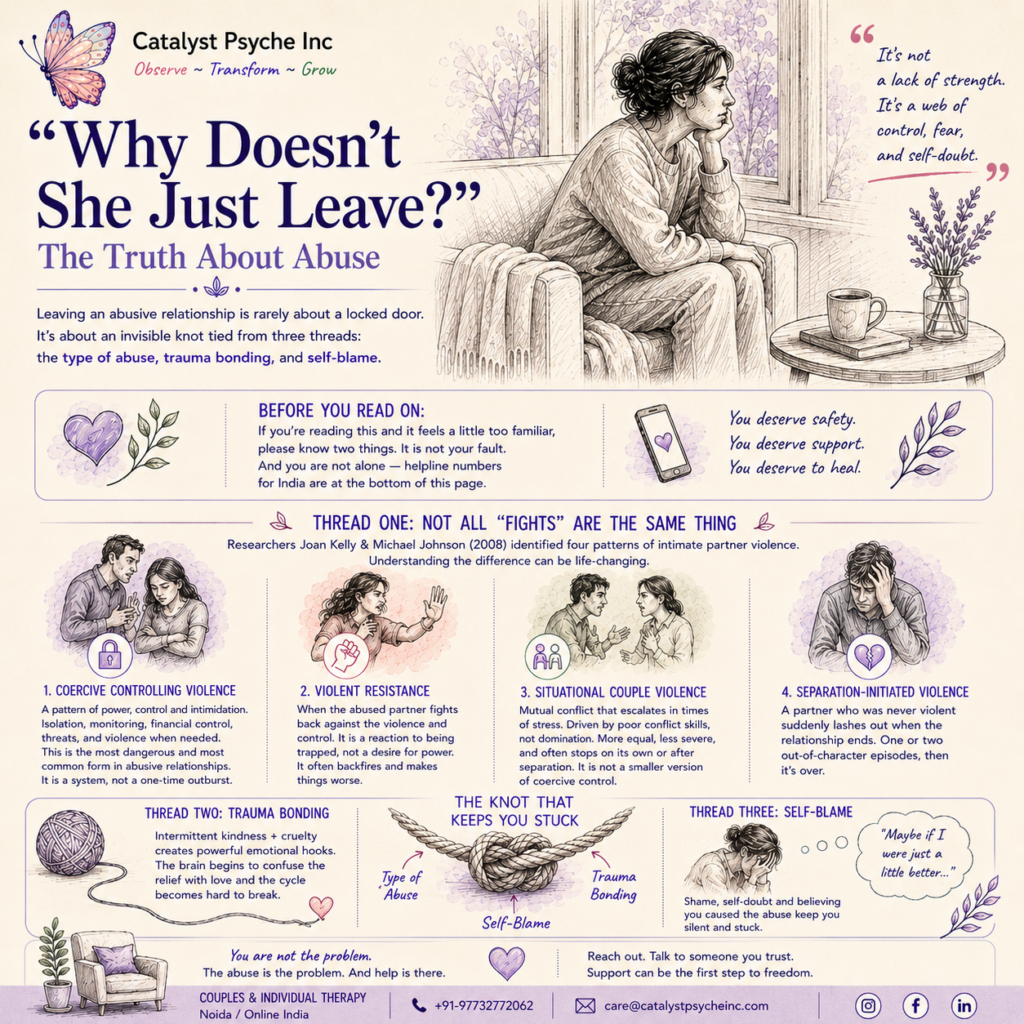
It is important to distinguish between ordinary relationship disagreements and patterns that compromise emotional or physical safety.
Differences in personality, communication style, or values do not automatically indicate an unhealthy relationship. However, recurring conflicts can become damaging when they involve humiliation, intimidation, coercion, threats, persistent control, or fear.
For example, disagreement about friendships is different from a partner monitoring your phone, restricting whom you can meet, or threatening you. Similarly, needing time alone after an argument is different from deliberately using prolonged withdrawal to punish or control someone.
The World Health Organization recognises that intimate partner violence includes physical aggression, sexual coercion, psychological harm, and controlling behaviours.
You do not have to tolerate abuse in the name of accepting differences. Communication strategies and compromise are not substitutes for safety, accountability, and appropriate support.
Where there is violence, coercive control, or a reasonable fear of retaliation, prioritise individual support and safety planning. Joint relationship counselling may not be appropriate in situations involving ongoing abuse.
It is also worth remembering that a relationship can be meaningful and still be incompatible in important ways. If partners have fundamentally different life goals, or if one person’s essential needs repeatedly go unmet, it may be necessary to consider whether the relationship can meet both people’s needs.
Acceptance is not the same as resignation.
Can Relationship Counselling Help With Recurring Conflicts?
Sometimes, couples understand that they need to communicate differently but find it difficult to put that understanding into practice.
An argument begins with a seemingly minor issue, but within minutes, both partners are reacting to years of frustration, disappointment, or hurt. Relationship counselling can help partners identify these patterns and understand how they contribute to the conflict cycle.
A therapist may help you:
- Distinguish solvable problems from enduring differences.
- Identify recurring communication patterns.
- Understand the emotions and needs beneath each person’s position.
- Practise listening and expressing concerns without personal attacks.
- Develop realistic agreements around responsibilities, boundaries, and expectations.
- Repair trust and emotional connection where appropriate.
- Evaluate whether important differences can be managed or represent incompatibilities that need to be addressed.
For example, a couple repeatedly arguing about one partner’s parents may discover that the conflict involves not only family visits but also expectations about loyalty, independence, and decision-making.
Once these underlying concerns are recognised, they can begin negotiating arrangements that respect both partners rather than repeatedly debating individual visits. Therapy does not guarantee that partners will agree or remain together. Its purpose is to help them understand the relationship more clearly, communicate more constructively, and make informed decisions about how to move forward.
Seeking help does not mean that a relationship has failed. It can be a proactive step towards understanding one another before resentment becomes entrenched.
Conclusion: You Do Not Have to Agree on Everything to Build a Sound Relationship
Every relationship brings together two people with different histories, personalities, expectations, and ways of experiencing the world.
Disagreements are therefore inevitable. What matters is how partners respond when their differences become difficult.
Some conflicts can be resolved through practical solutions. Others require ongoing negotiation, acceptance, and curiosity. When recurring differences become gridlocked, the challenge is to restore dialogue before frustration turns into emotional distance.
A safe relationship does not require you to abandon your needs or agree with your partner about everything. It asks you to remain curious about one another, communicate honestly, respect boundaries, and recognise that understanding someone does not always mean sharing their perspective.
The next time you find yourselves having the same argument, consider asking a different question.
Instead of asking, “How do I make my partner understand that I’m right?” try asking, “What is important to each of us here, and how can we approach this without losing our connection?”
That shift may not resolve every disagreement. But it can help you approach conflict with greater compassion, clarity, and respect.
Read More – Gottman’s Four Horsemen: Criticism, Contempt, Defensiveness & Stonewalling & An IFS Perspective on Relationship Conflict Why People Stay in Abusive Relationships: Understanding through 3 threads
At Catalyst Psyche Inc, we recognise that relationship difficulties can be emotionally exhausting, particularly when the same disagreements keep returning. Relationship counselling can offer a supportive space to understand these patterns, strengthen communication, and explore ways forward. You do not have to wait until a relationship reaches a breaking point to seek support.
Frequently Asked Questions (FAQs)
- Is it normal to have the same argument repeatedly in a relationship?
Yes. Some recurring disagreements arise from enduring differences in personality, values, lifestyle preferences, or emotional needs. However, repeatedly having the same argument without understanding or addressing the underlying concerns can lead to resentment and emotional distance.
- How do you resolve conflicts in a relationship?
Start by identifying the specific issue, expressing your concerns without personal attacks, listening to your partner’s perspective, and agreeing on practical steps where possible. If the disagreement reflects a lasting difference, focus on understanding and managing that difference rather than forcing complete agreement.
- What are perpetual problems in relationships?
Perpetual problems are recurring disagreements rooted in relatively enduring differences between partners. Examples may include different social needs, approaches to money, preferences for family involvement, or expectations about independence. These differences may not disappear completely, but couples can learn to discuss and manage them constructively.
- When should couples consider relationship counselling?
Consider counselling when recurring arguments are affecting emotional connection, when conversations repeatedly become defensive or hostile, when trust has been damaged, or when you struggle to reach workable agreements. Counselling can also help couples address important differences before they become entrenched.
- Can a healthy relationship exist without resolving every conflict?
Yes. A relationship can remain healthy even when some differences persist, provided partners can discuss them respectfully, negotiate where possible, and protect each other’s dignity and boundaries. Persistent incompatibilities or harmful behaviour, however, should not be dismissed as ordinary differences.
- What is the difference between a relationship conflict and incompatibility?
A conflict is a disagreement between partners; incompatibility refers to a mismatch that may make it difficult to meet both people’s essential needs or life goals. Some conflicts can be resolved, others can be managed, and some reveal fundamental differences that require difficult decisions.
References
- Gottman, J. M., & Silver, N. (2015). The Seven Principles for Making Marriage Work: A Practical Guide from the Country’s Foremost Relationship Expert. Revised edition. Harmony Books.
The book discusses the distinction between solvable and perpetual relationship problems, constructive conflict management, and the importance of understanding each partner’s perspective. - The Gottman Institute. (n.d.). Research. https://www.gottman.com/about/research/
Overview of relationship research, including findings on recurring conflicts and relationship dynamics. - The Gottman Institute. (2012). Managing Conflict: Solvable vs. Perpetual Problems. https://www.gottman.com/blog/managing-conflict-solvable-vs-perpetual-problems/
An accessible explanation of recurring relationship conflicts, gridlock, and the importance of dialogue. - American Psychological Association. (2018). Happy Couples: How to Keep Your Relationship Healthy. https://www.apa.org/topics/marriage/healthy-relationships
Guidance on communication, listening, and constructive approaches to relationship disagreements. - Sanford, K. (2010). Assessing conflict communication in couples: Comparing the validity of self-report, partner-report, and observer ratings. Journal of Family Psychology, 24(2), 165–174. https://doi.org/10.1037/a0017953
- World Health Organization. (2026). Violence Against Women. https://www.who.int/news-room/fact-sheets/detail/violence-against-women
Information on intimate partner violence, including psychological harm, sexual coercion, and controlling behaviours.
Editorial note: The Indian scenarios in this article are illustrative examples, not descriptions of actual clients. The 69% finding refers to research on couples and should not be interpreted as a universal statistic for every relationship or population.