Have you ever opened your eyes in the morning and felt a sudden wave of dread, even when nothing particularly bad has happened? Perhaps your heart feels heavy, your mind begins anticipating everything that could go wrong, or you experience an unsettling sense that something is wrong without knowing exactly what it is. You may …

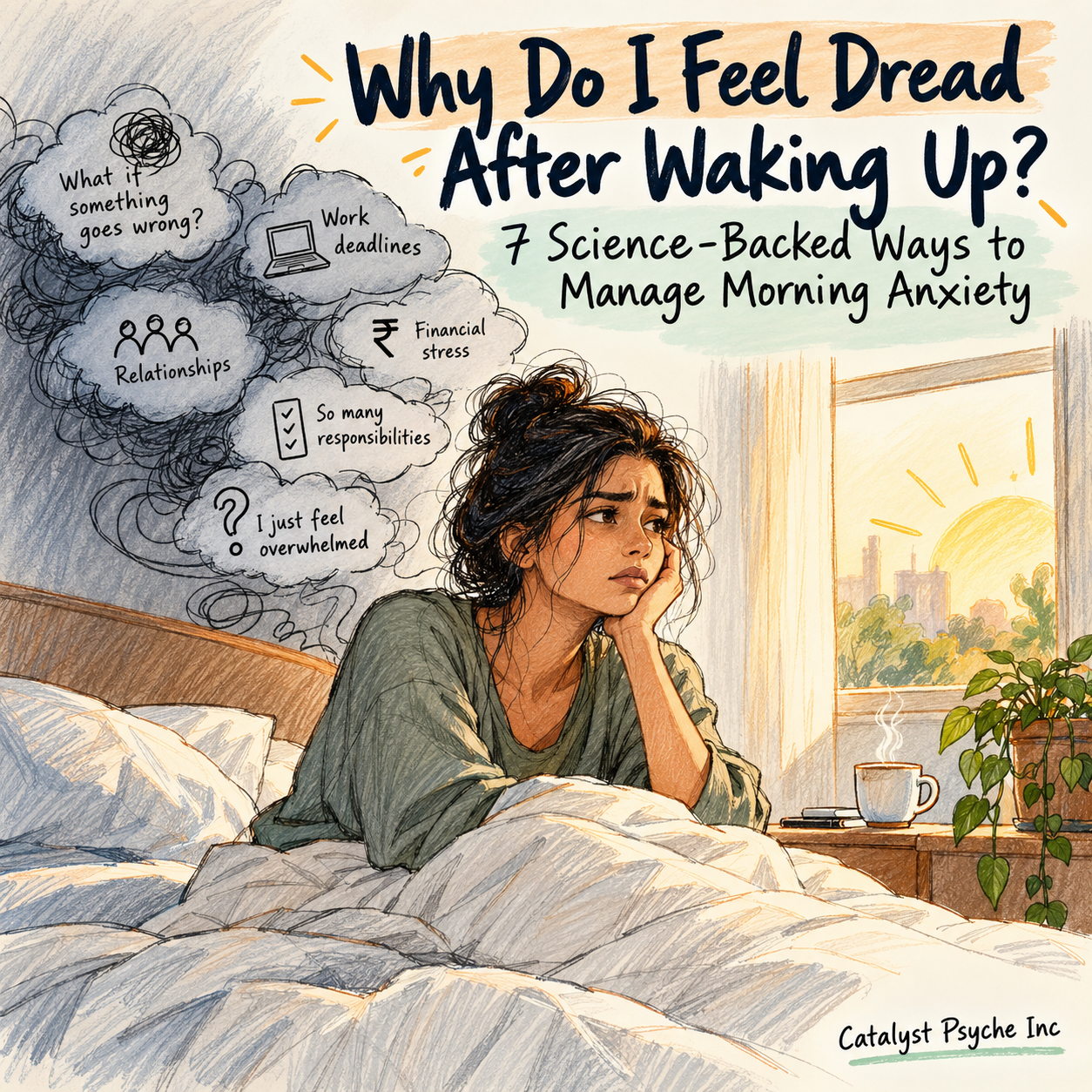
Have you ever opened your eyes in the morning and felt a sudden wave of dread, even when nothing particularly bad has happened?
Perhaps your heart feels heavy, your mind begins anticipating everything that could go wrong, or you experience an unsettling sense that something is wrong without knowing exactly what it is. You may not even have a specific worry to point to. You simply feel anxious, overwhelmed, or reluctant to face the day.
If this sounds familiar, you are not alone. For some people, mornings are accompanied by a persistent sense of uneasiness that gradually eases as the day progresses. But why does this happen? Is it related to stress hormones, the way our brains anticipate future events, or something deeper?
Research offers some useful explanations. Understanding these mechanisms can help you respond to morning anxiety with greater compassion and develop a routine that makes the beginning of your day feel more manageable.
Table of Contents
Toggle1. What Is Morning Anxiety, and Why Do You Feel Dread After Waking Up?
Morning anxiety describes feelings of worry, apprehension, nervousness, or dread that occur shortly after waking up. It is not a formal diagnosis, but it can be associated with stress, anxiety-related difficulties, and other emotional or physical factors.
Morning anxiety can take different forms. You might wake up worrying about work, finances, relationships, or responsibilities. Alternatively, you might experience a heavy emotional feeling without an identifiable trigger.
Sometimes, the physical sensation comes first, followed by thoughts attempting to explain it. At other times, your mind immediately begins anticipating the challenges of the day. An important point to understand is that feeling dread in the morning does not automatically mean that something is wrong with you, or that something bad is going to happen.
Your body and mind undergo several changes as you transition from sleep to wakefulness. At the same time, your brain may begin anticipating what lies ahead. For some people, these processes can coincide with feelings of anxiety.
Research suggests that two particularly useful areas to understand are the body’s cortisol awakening response and the role of anticipatory anxiety.
2. How Does Cortisol Contribute to Morning Anxiety?
One possible piece of the puzzle is cortisol, a hormone involved in regulating the body’s response to stress, energy metabolism, and daily rhythms.
Cortisol is often described as the stress hormone. However, this description can be misleading because cortisol is essential for normal functioning, even when we are not experiencing psychological stress.
Understanding the cortisol awakening response
After waking up, most people experience a temporary increase in cortisol levels over approximately the first 30–45 minutes. This is known as the cortisol awakening response (CAR).
In their comprehensive review, Stalder et al. (2025) explain that this response is regulated by a combination of circadian processes, environmental influences, emotional experiences, and anticipatory processes. It may help prepare the body and brain for the demands of the day. In other words, your body is not necessarily waking up in a state of stress. It is also preparing itself for activity.
Based on cortisol awakening response (CAR) studies, if you are already anticipating a difficult day, experiencing ongoing stress, or feeling emotionally overwhelmed, this transition may coincide with your experience of morning anxiety.
This does not mean that cortisol is necessarily causing your dread. The relationship between cortisol and emotional experiences is complex, and the awakening response varies between individuals.
What does research say about stress and morning cortisol?
Chida and Steptoe (2009) conducted a systematic review and meta-analysis examining the relationship between the cortisol awakening response and psychosocial factors. Their review identified 147 eligible studies and found that the increase in cortisol after waking was positively associated with job stress and general life stress, although findings across the literature were not entirely consistent.
This suggests that the way we experience and respond to stress may be related to morning physiological processes.
However, it is important not to interpret this finding too simplistically. A person who experiences morning dread does not necessarily have elevated cortisol, and a cortisol test alone cannot explain why someone feels anxious after waking.
The takeaway: Your body has a normal physiological transition when you wake up. Morning anxiety may occur alongside this process, but it cannot be explained by cortisol alone.
3. Why Does Your Mind Start Worrying Before the Day Even Begins?
Another possible explanation is anticipatory anxiety—the anxiety we experience when thinking about something that might happen in the future.
Imagine waking up on a Monday morning. Before you have even left your bed, your mind begins reviewing an unfinished assignment, an uncomfortable conversation, financial concerns, or the possibility of disappointing someone. Nothing has happened yet, but your mind is already responding to the possibility of difficulty. For some people, this process is so automatic that they experience the dread before they consciously identify what they are worried about.
What does research say about anticipatory anxiety?
Helbig-Lang et al. (2012) investigated anticipatory anxiety in people diagnosed with panic disorder using an ambulatory assessment approach. Twenty-one participants recorded their experiences over one week, producing 549 sets of responses.
The researchers found that anticipatory anxiety followed a daily pattern and was associated with internal and situational factors related to panic experiences. Previous panic attacks intensified subsequent anticipatory anxiety and negative emotional states, while participants’ perceived ability to cope with panic attenuated these effects.
Although this was a small study involving people with panic disorder, it provides an important insight into how expectations and perceived coping ability can influence anxiety. When we anticipate a situation that feels threatening or difficult to manage, we may begin experiencing distress before the situation occurs.For someone who wakes up feeling dread, it may be useful to explore whether their mind is anticipating demands, uncertainty, conflict, failure, or a feeling of being unable to cope.
This is not always a conscious process. Sometimes, the first step is simply noticing that the feeling appears before a clear explanation does.
Ask yourself a different question
Instead of asking, “Why am I feeling like this again?” try asking:
“Is there something about today that my mind is preparing me for, even if I haven’t consciously recognised it yet?”
You do not have to find an answer immediately. The purpose is to become curious about your experience rather than treating the feeling as evidence that something is wrong. When you start observing, you in a way distant yourself from these thoughts and physiological response of feeling dread. You get into the Observer-Object (you become the observer and the emotions, feelings, physiological response as object) and it can create a separate and help in allowing yourself to create a space or add something in your morning routine to get better.
4. How Can You Deal With Morning Anxiety? Seven Practical Strategies
Understanding why morning dread occurs is useful, but it is equally important to know what you can do when it happens.
The following strategies draw on the physiological and cognitive-behavioural ideas discussed above. They are practical starting points rather than a treatment protocol directly tested by the three studies cited in this article.
1. Stop Trying to Force the Feeling Away
When you wake up feeling anxious, your first instinct may be to fight the feeling, criticise yourself, or demand that you become productive immediately. Unfortunately, this can create another layer of distress: anxiety about being anxious.
Instead, try acknowledging the experience without treating it as a prediction.
You might tell yourself:
“I am noticing a feeling of dread this morning. It is uncomfortable, but I do not need to understand or resolve everything immediately.”
This does not mean ignoring your problems. It means allowing yourself a moment to recognise the experience before deciding what to do next.
2. Give Your Body Time to Wake Up
Because the transition from sleep to wakefulness involves physiological changes, it may help to begin your morning gradually rather than immediately exposing yourself to demands and information.
Before checking your phone or opening your work messages, sit up, notice your surroundings, and take a few comfortable, unforced breaths. Feel your feet against the floor. Notice the temperature of the room and the sounds around you. If it feels comfortable, spend a few minutes stretching or walking gently. The goal is not to manipulate your cortisol levels or eliminate anxiety through a single exercise. It is to create a brief pause between waking up and responding to everything that demands your attention.
3. Identify What Your Mind Is Anticipating
If morning dread is connected to anticipatory anxiety, identifying what you are expecting or fearing may help you understand the experience.
Consider writing down the first thought that comes to mind when you wake up. It could be something specific, such as, “I cannot handle another day of work,” or something more general, such as, “Something is going to go wrong.”
You can then ask yourself:
- What am I predicting will happen?
- What evidence supports this prediction, and what might I be overlooking?
- If this situation becomes difficult, what resources or support could help me manage it?
These questions are not intended to dismiss genuine concerns. They help distinguish between an actual problem requiring action and a feared outcome that has not yet occurred.
If you cannot identify a particular thought, that is fine too. Not every emotional experience begins with a clear, conscious belief.
4. Focus on Your Ability to Cope, Not on Controlling Every Outcome
One of the useful findings from Helbig-Lang et al. (2012) concerns perceived coping ability.
When we believe we will be unable to handle a difficult experience, anticipating it may become particularly distressing.
You may not be able to control how your colleagues behave, whether a difficult conversation occurs, or what unexpected challenges arise. However, you can begin identifying what you might do if those situations happen.
Try replacing “I cannot deal with today” with a more specific and realistic statement: “Today may be difficult, but I can approach one problem at a time. If I need help, I can ask for it.”
The intention is not to convince yourself that everything will go well. It is to remind yourself that uncertainty and difficulty do not automatically mean helplessness.
5. Break the Morning Into Small, Manageable Actions
When you wake up feeling overwhelmed, thinking about the entire day can make everything seem more difficult.
Instead, temporarily narrow your focus. You do not have to solve your work problems, relationship concerns, or future uncertainties before getting out of bed. Choose one small action: drink a glass of water, shower, prepare breakfast, step outside, or get dressed. Once you have completed it, decide what comes next.
This approach can help you begin engaging with your day without waiting for your emotional state to become perfect first.
6. Create a Consistent, Low-Pressure Morning Routine
A morning routine does not need to be elaborate or begin at 5 a.m.
Consider a simple ten-minute sequence that includes gentle movement, a moment of grounding, and one manageable action for the day.
For example:
- Minutes 1–2: Orient yourself to your surroundings and breathe comfortably.
- Minutes 3–5: Stretch or walk gently. Include some breathwork.
- Minutes 6–8: Notice your feelings and identify any immediate concerns.
- Minutes 9–10: Choose one realistic priority for the morning.
Try following the routine for a week and notice whether the intensity or duration of your dread changes.
You do not need to rate the routine as successful or unsuccessful based on whether anxiety disappears. Instead, observe whether it helps you respond to the feeling differently.
7. Notice the Pattern and Seek Support When Needed
If morning dread occurs repeatedly, keeping a brief record may help you understand what contributes to it.
Note when you woke up, how intense the dread felt, what thoughts or physical sensations accompanied it, and how long it lasted. You could also record sleep quality and whether the feeling changed after beginning your day. Over time, this may reveal whether the experience is associated with particular responsibilities, recurring worries, or specific situations.
If the dread persists, interferes with work or relationships, affects your sleep, or makes everyday functioning difficult, consider speaking with a qualified mental health professional. Morning anxiety can have several possible explanations, and a more thorough assessment may be helpful. You do not need to wait until the distress becomes unbearable to seek support.
5. When Should You Be Concerned About Morning Anxiety?
Occasional uneasiness upon waking is not necessarily a sign of a mental health condition.
However, persistent morning dread deserves attention, particularly when it occurs alongside frequent worry, panic symptoms, low mood, loss of interest, significant sleep disruption, or difficulty carrying out everyday activities. It is also important not to assume that every physical sensation is psychological. New or severe physical symptoms warrant appropriate medical assessment.
If you are struggling with recurring anxiety, a therapist can help you explore the thoughts, emotional patterns, and circumstances associated with the experience. Depending on your needs, therapy may involve cognitive-behavioural strategies, work on coping with uncertainty, or other appropriate approaches.
The aim is not simply to make mornings feel better temporarily. It is to understand what is happening and develop a more sustainable way of responding to it.
6. Frequently Asked Questions About Morning Anxiety
Why do I wake up with a feeling of dread for no reason?
Sometimes, the feeling appears before you can identify a specific thought or concern. Physiological changes associated with waking, ongoing stress, and anticipatory anxiety may all be relevant. However, morning dread has multiple possible explanations, and the absence of an obvious trigger does not establish a particular cause.
Is morning anxiety caused by high cortisol?
Not necessarily. Cortisol normally rises after waking as part of the cortisol awakening response. Research has found associations between aspects of this response and psychosocial stress, but morning anxiety does not automatically indicate high cortisol. These studies cannot establish that cortisol is the direct cause of an individual’s dread.
Why does my morning anxiety improve as the day progresses?
For some people, anxiety decreases as they become engaged in daily activities or gain a clearer sense of what the day involves. Others experience anxiety throughout the day. Tracking when the feeling appears and subsides may help you identify patterns worth exploring.
Can a morning routine help with morning anxiety?
A simple routine involving grounding, gentle movement, reflection, and manageable tasks may help you begin the day more deliberately. However, a routine is not a guaranteed treatment. Persistent or impairing symptoms may require professional assessment and support.
Should I seek therapy for morning dread?
Consider therapy if morning dread occurs frequently, causes significant distress, or affects your ability to function. A therapist can help you explore possible triggers, understand the role of anticipatory thoughts, and identify strategies suited to your circumstances.
7. You Don’t Have to Feel Ready for the Day Before You Begin
Waking up with dread can be confusing, particularly when you cannot explain why you feel that way.
Research on the cortisol awakening response suggests that waking involves a complex physiological process influenced by circadian rhythms, environmental cues, and anticipatory processes. Research on anticipatory anxiety also highlights how expectations and perceived coping ability can shape emotional experiences. These findings offer useful ways of understanding morning dread, but they do not provide one universal explanation.
You do not need to force yourself to feel positive, figure out every concern, or make the anxiety disappear before taking your first step.
Start by noticing what you are experiencing, giving yourself a little time to settle, and choosing one manageable action. If the feeling keeps returning, approach it as something worth understanding rather than something to be ashamed of.
Your morning does not have to feel perfect for you to begin taking care of yourself.
Looking for Support With Anxiety?
At Catalyst Psyche Inc, we recognise that anxiety can affect people in different ways. Therapy offers a space to explore recurring patterns of worry, understand your emotional experiences, and develop practical ways of coping with everyday challenges.
If morning anxiety or persistent dread is affecting your quality of life, consider reaching out to a qualified mental health professional.
Book a session with Catalyst Psyche Inc to explore your concerns and find an approach suited to your needs.
https://catalystpsycheinc.com/book-session/
Read More – You Are Not Your Anxiety: Understanding the Self in Internal Family Systems (IFS) & 8 C’s
References
Chida, Y., & Steptoe, A. (2009). Cortisol awakening response and psychosocial factors: A systematic review and meta-analysis. Biological Psychology, 80(3), 265–278. https://doi.org/10.1016/j.biopsycho.2008.10.004
Helbig-Lang, S., Lang, T., Petermann, F., & Hoyer, J. (2012). Anticipatory anxiety as a function of panic attacks and panic-related self-efficacy: An ambulatory assessment study in panic disorder. Behavioural and Cognitive Psychotherapy, 40(5), 590–604. https://doi.org/10.1017/S1352465812000057
Stalder, T., Oster, H., Abelson, J. L., Huthsteiner, K., Klucken, T., & Clow, A. (2025). The cortisol awakening response: Regulation and functional significance. Endocrine Reviews, 46(1), 43–59. https://doi.org/10.1210/endrev/bnae024
This article is for educational purposes and does not replace individualised medical or psychological assessment.